
THE PROCESS
HOW IT'S MADE
The questions people ask me most.
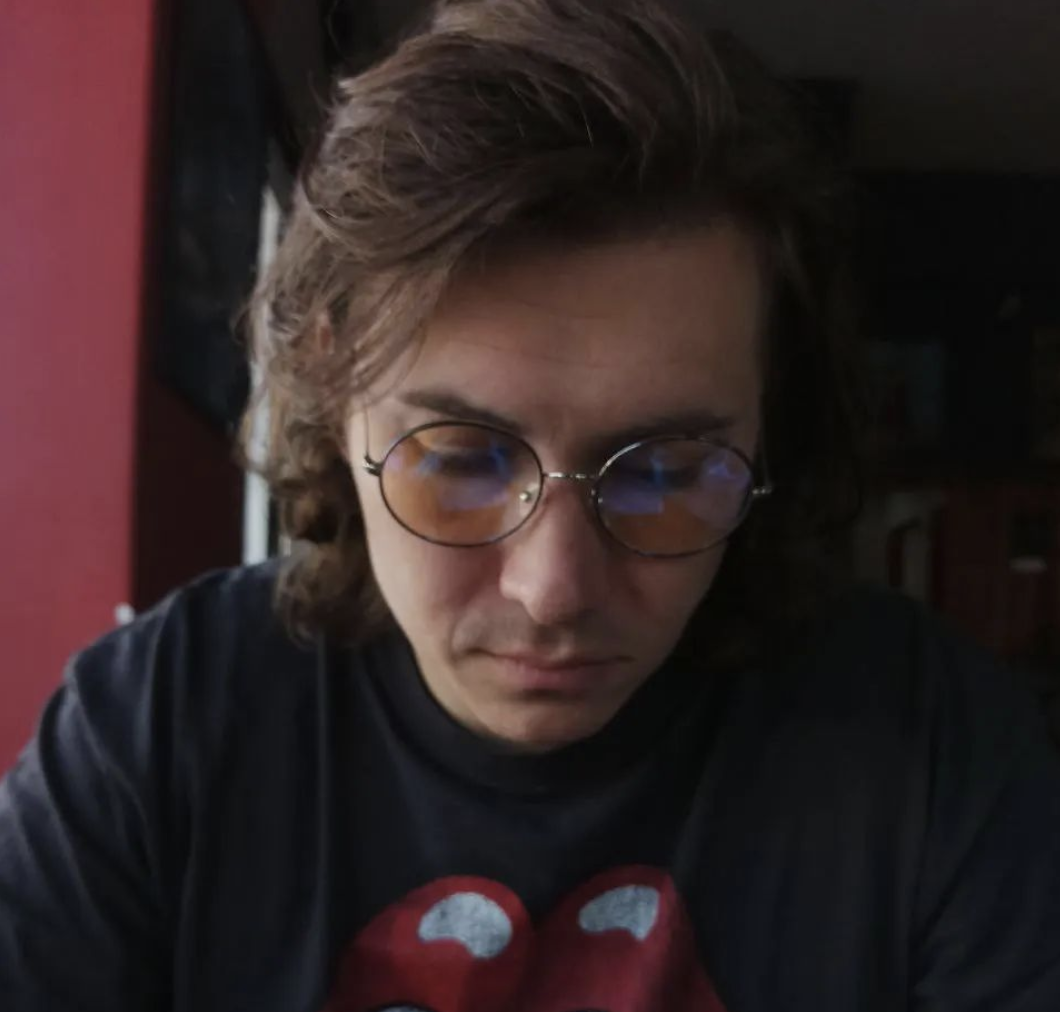
THE ONE DOING IT
Every line on every piece goes down by my hand. No studio, no assistants, no one else touching the canvas.
01How is the work made?
It starts as a drawing on an iPad, line by line, often to the pixel. Silvertone International print it on Rembrandt canvas or archival paper with Epson pigment inks, which are acid free and built to last. Then I work back into the print by hand, and that is what makes it an object rather than a copy.
02Is it a print or a painting?
Both. The print is the ground I start on, and everything after that goes on by hand, once, on that canvas. Acrylic, oil pastel, paint marker, ink. Some pieces need very little. Others take longer. No two come out the same.
03What do the editions mean?
An edition is how many exist in one size and medium. Small sizes run in bigger editions. Big sizes run in tiny ones. Some pieces exist once and never again. The number for any piece is on its certificate and on its page here.
04What is a True Size Original?
A True Size Original is printed at the size I actually drew it, rather than a standard paper size. There is one of each.
05What is a Monotype?
One of one. A single certified piece in one size and one medium, with nothing else like it anywhere.
06How do I know it is real?
Every piece ships with a certificate I sign by hand, with the edition on it. A few collectors frame the certificate next to the work.
07How should I look after it?
Treat it like any canvas. Out of direct sun, away from damp, and dust it rather than wipe it. The hand finished layers are sealed and stable, so it asks nothing unusual of you.